When international families prepare for life in Denmark, they often focus on practical things first: finding a home, understanding CPR numbers, choosing a kindergarten and perhaps learning a few Danish phrases.
But there is one family member going through an even bigger transition.
Your child.
As a Brazilian mother raising two daughters in Denmark, I remember worrying constantly about the language. Would they understand their teachers? Would they make friends? Would they feel different?
Looking back, I realised something surprising.
Children rarely worry about grammar.
They worry about belonging.
Helping a child settle into a Danish kindergarten is about much more than teaching Danish vocabulary. It’s about helping them understand a new culture, new routines and a completely new way of spending their day.
This guide is everything I wish someone had explained to me before my daughters started kindergarten in Denmark.
Understanding the Danish Childcare System
Children generally attend vuggestue (nursery) until around age three before moving to børnehave (kindergarten), where they stay until school begins.
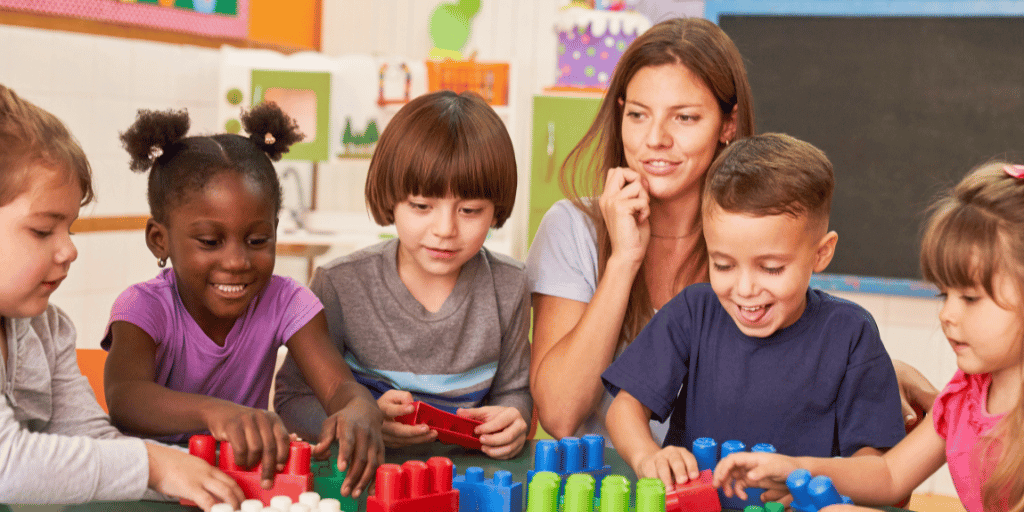
Unlike many countries, Danish kindergartens don’t focus on worksheets or early academics. Instead, children learn through play, exploration, cooperation and everyday experiences.
You won’t find rows of desks.
You’ll find children building forts, climbing trees, painting, cooking, digging in the sand and solving problems together.
The Danish Philosophy: Learning Through Play
One of the biggest surprises for many international parents is that play is considered serious learning.
When children negotiate whose turn it is, build together or invent games, they are developing language, confidence, empathy and problem-solving skills.
That philosophy aligns perfectly with how children naturally learn a new language: by using it in meaningful situations.
Don’t Be Surprised by Outdoor Life
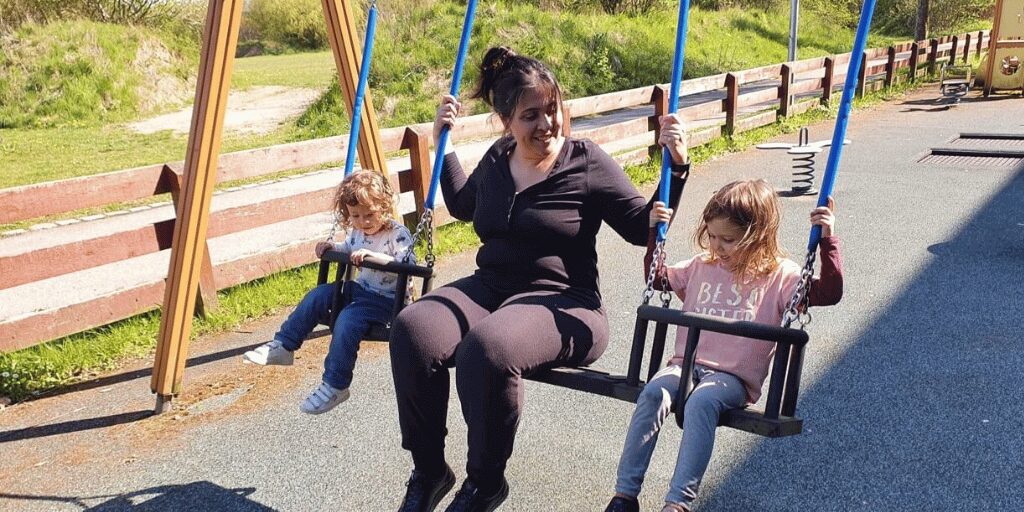
Danish children spend a remarkable amount of time outdoors.
Rain is rarely a reason to stay inside.
Instead, children simply wear regntøj (rain gear) and continue exploring.
Rather than worrying about muddy clothes, most parents soon discover that muddy clothes usually mean a fantastic day.
Independence Starts Early
One thing I noticed quickly was how much children are encouraged to do for themselves.
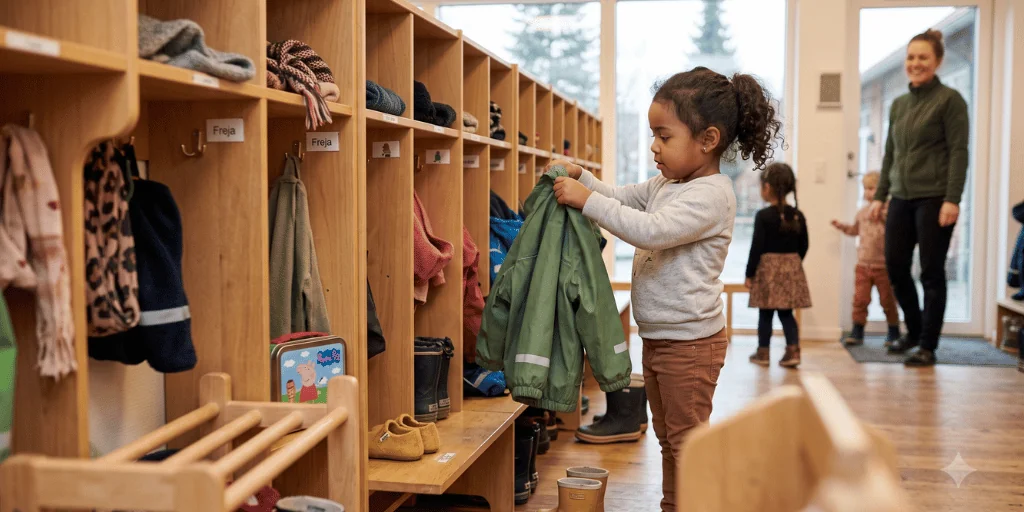
Three-year-olds hang up jackets, change into hjemmesko (indoor shoes), carry their madpakke (lunchbox) and help tidy up.
At first this felt very different from what I had grown up with.
Today I see these small routines as daily confidence builders.
(We’ll explore this in much more detail in our article ‘What Danish Preschoolers Are Expected to Do Independently.’)
Does My Child Need to Speak Danish?
This is probably the question I hear most often.
The reassuring answer is no.
Your child does not need perfect Danish before starting kindergarten.
Teachers are experienced in welcoming international children.
Children communicate through smiles, gestures and play long before they share a common language.
What really helps is recognising everyday words they’ll hear every day and feeling familiar with common routines.
A Parent Checklist Before the First Day
- Visit the kindergarten playground.
- Practice putting on rain gear.
- Label clothing.
- Learn a few everyday Danish words.
- Talk positively about kindergarten.
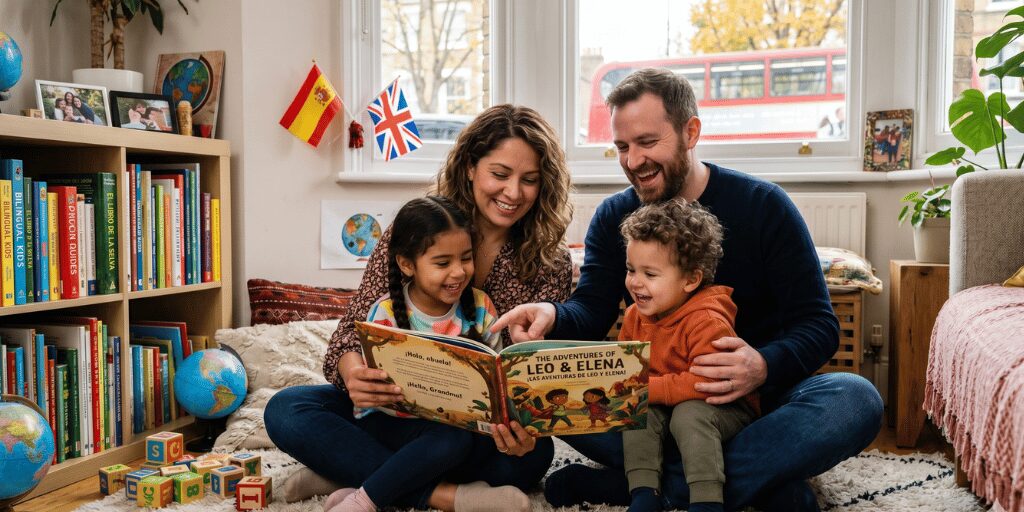
- Read picture books about starting school.
- Listen to Danish children’s songs.



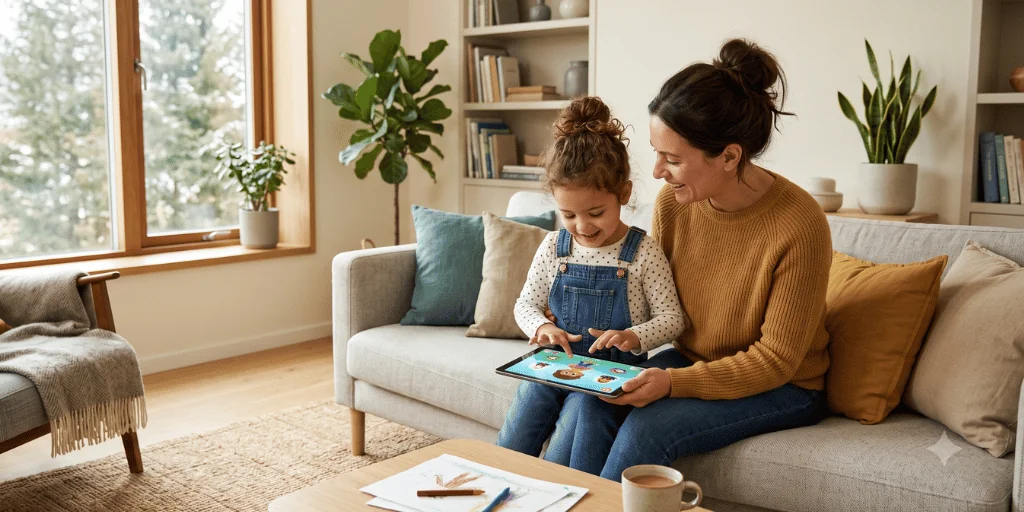
 📱 About the app